

The rise of AI in software development has changed the rules of the game. Tools like GitHub Copilot and autonomous coding agents can generate code in seconds. Productivity has increased dramatically.
But speed does not guarantee reliability.
AI can produce syntactically correct code. What it cannot guarantee is alignment with business logic, edge cases, and real-world user behavior. Without structured testing, AI-generated code can introduce subtle bugs, regressions, and unstable workflows.
This is where Test-First Development becomes essential.
Why AI Makes Testing More Important, Not Less
There is a common misconception that AI reduces the need for disciplined engineering practices. In reality, it does the opposite.
When development speed increases, risk increases with it.
AI amplifies output. Testing must amplify confidence.
Without tests guiding the process, AI becomes a powerful engine without steering — fast, impressive, but unpredictable.
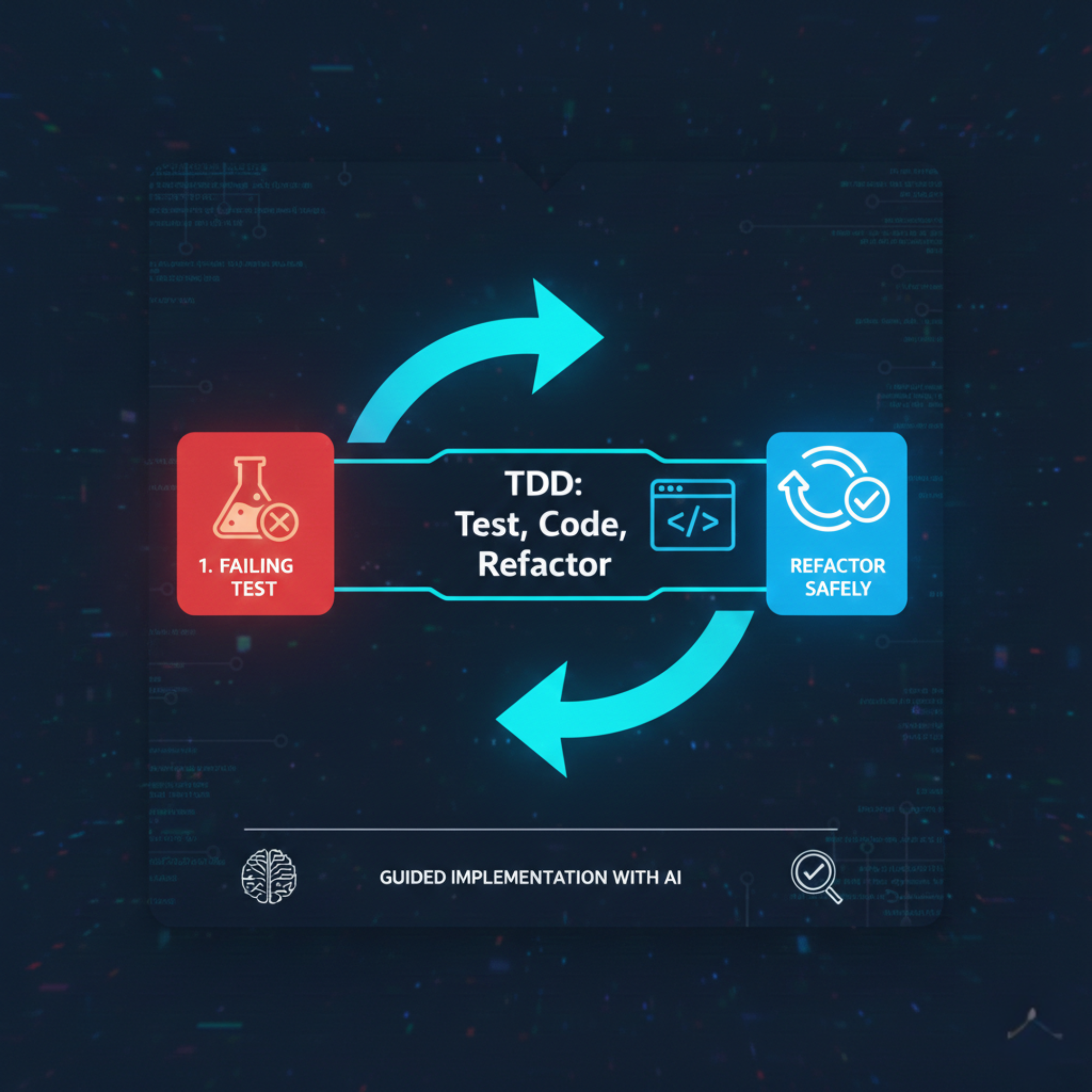
TDD: Controlling Implementation Through Tests
Test-Driven Development (TDD) follows a simple discipline:
- Write a failing test
- Implement the minimal code to pass
- Refactor safely
For example, consider a login form validation:
- First, write a test that ensures invalid passwords are rejected.
- Then implement the minimal validation logic.
- Finally, refactor while keeping tests green.
When AI is used in this workflow, the tests define the boundaries.
The AI writes code — but the tests decide what is acceptable.
TDD transforms AI from a code generator into a guided implementation assistant.
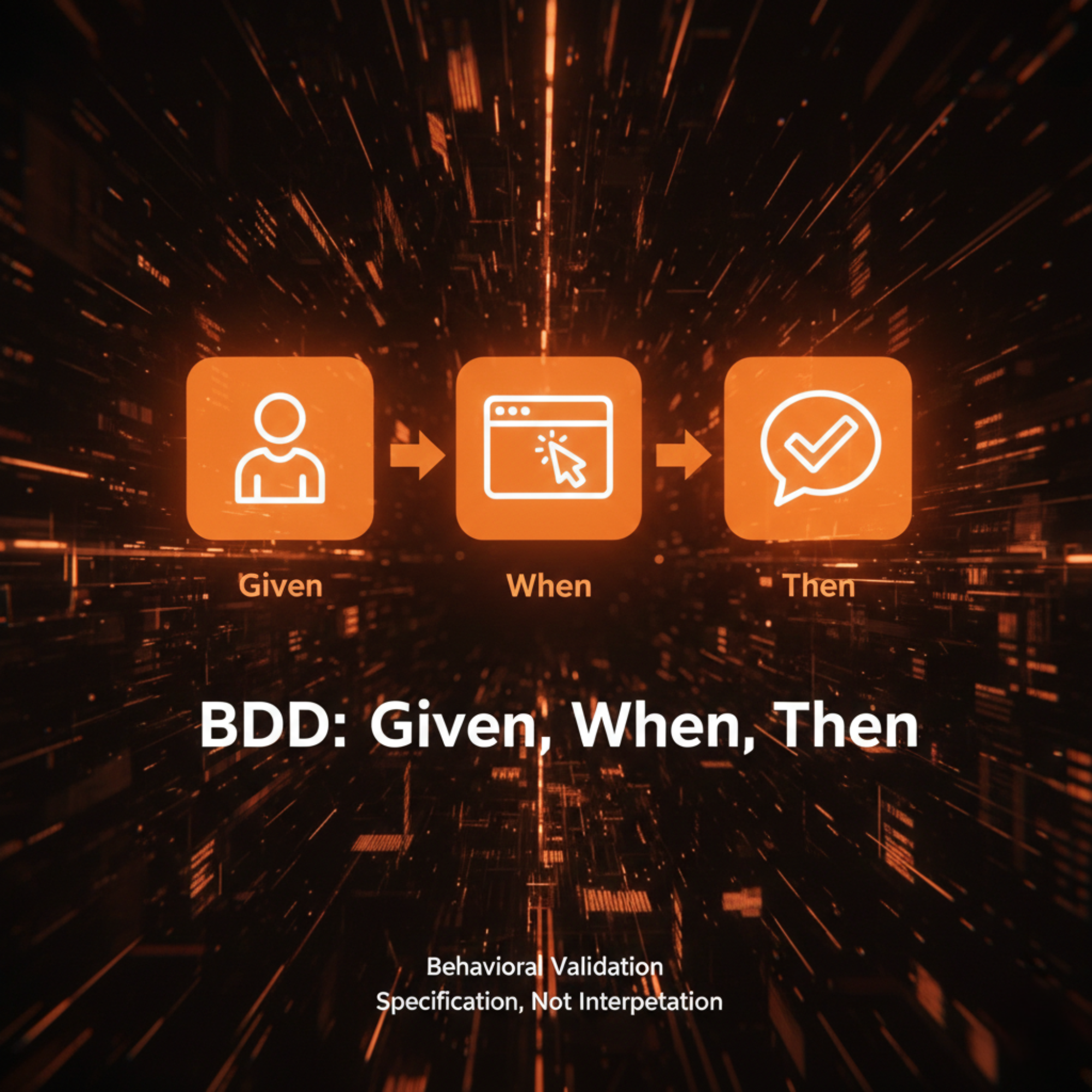
BDD: Defining Behavior Before Code Exists
Behavior-Driven Development (BDD) extends this concept by describing expected system behavior in plain language.
Example:
Given a logged-in user
When they submit invalid payment details
Then the system should display an error message
BDD clarifies intent before implementation.
When AI tools generate code based on clearly defined behavioral scenarios, ambiguity decreases. The system behaves according to specification, not interpretation.
BDD becomes the communication bridge between business logic and automated implementation.
AI Testing: Validation at Scale
AI-generated code may pass unit tests while still failing in real-world scenarios.
That is why testing must operate at multiple levels:
- Unit testing (TDD)
- Behavioral validation (BDD)
- Integration checks
- End-to-end testing
AI-driven testing can help expand coverage and analyze edge cases, but it should reinforce structured testing practices, not replace them.
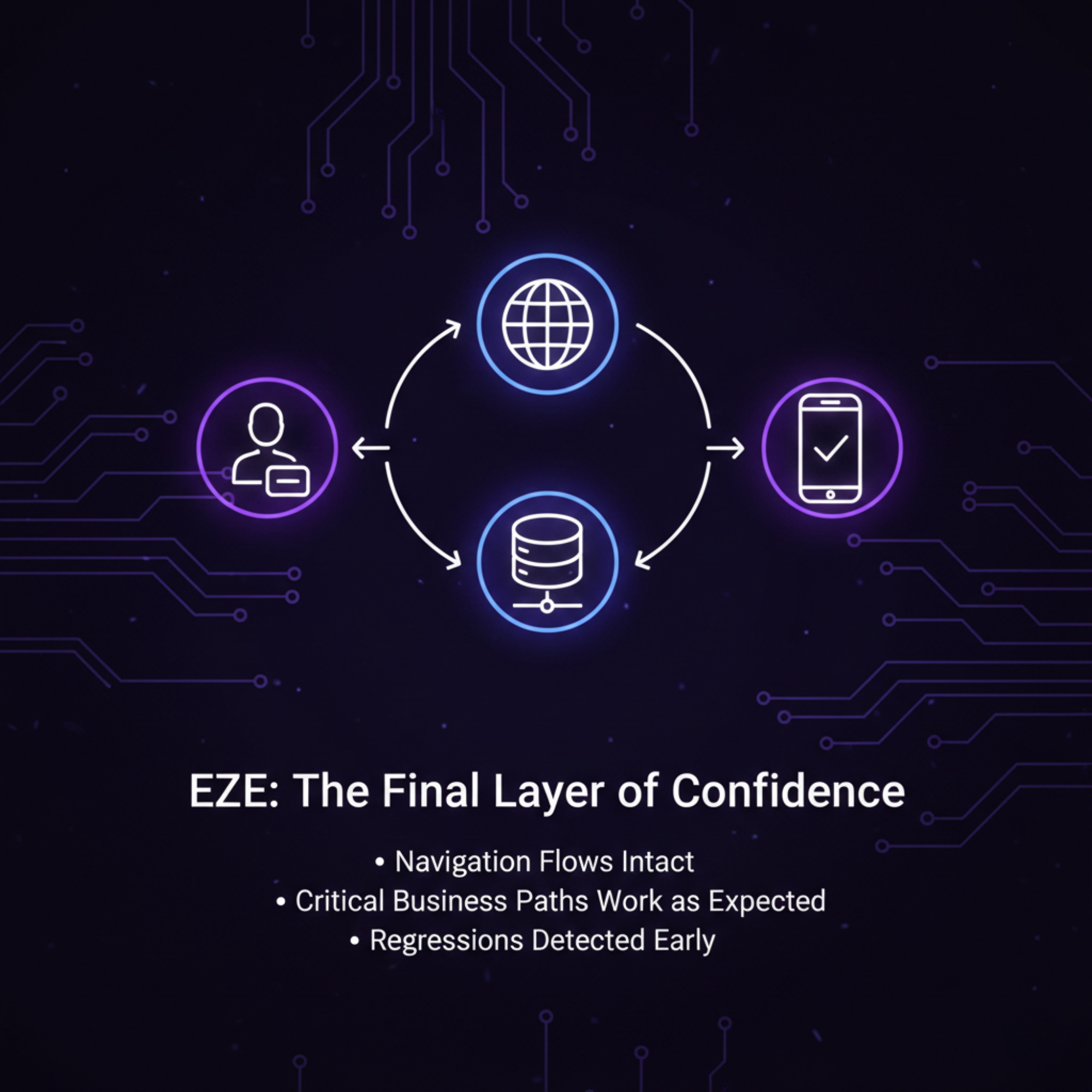
Why End-to-End Testing Is Critical in AI-Driven Systems
Modern web applications are complex ecosystems:
- UI layers
- APIs
- Authentication flows
- Third-party integrations
Even if AI produces correct logic in isolation, full user journeys can still break.
End-to-End (E2E) testing ensures:
- Navigation flows remain intact
- Critical business paths work as expected
- Regressions are detected early
In AI-accelerated environments, E2E testing becomes the final layer of confidence.
The Business Advantage of Test-First AI Development
Teams that integrate AI without redesigning their testing strategy risk accumulating invisible technical debt.
Teams that combine AI with disciplined test-first workflows gain:
- Faster iteration cycles
- Safer feature releases
- Higher confidence in deployments
- Sustainable long-term quality
AI multiplies speed.
Testing multiplies trust.
The future of development is not AI replacing the engineering discipline; it is AI operating within it.
When guided by clear specifications and robust automated tests, AI becomes a powerful accelerator rather than a liability.